How to Know if Your Spouse Loves You After a Affair
Janice thought she had a good marriage. While she and her husband didn't accept much of a sex life later on they became parents, they enjoyed each other'southward company and liked parenting their two young children. Janice believed their marriage was grounded in a solid dear for one another.
Simply this all changed when Janice picked up Robert'due south prison cell phone and saw a text message saying, "I tin't expect to meet yous once more. Last night was astonishing."
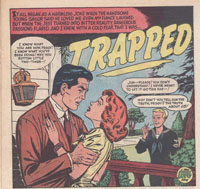 © Comics from the collection of Jenny Miller (www.jennymiller.com/romancecomics)
She read through a serial of texts revealing that he had been having an affair with a adult female co-worker for at least several months. "I felt similar someone hit me in the head with an axe," said Janice, a patient of mine whose proper name and details have been changed. "Actually. I had to prevarication down on the bed considering I felt like the floor was about to drop out below me. Everything I believed to be true was all of a sudden called into question."

Discovering a partner'south affair can be devastating because it strikes at so many aspects of one'southward identity. It can crusade the betrayed person to doubt their own attractiveness or judgment in people, and it can raise central questions most the inherent goodness of the earth.
This is because our relationships are built upon the fragile agreement that those about whom we care most deeply will comport, in big function, equally they take ever behaved. A betrayal tin shatter that trust and open the door to the possibility that things in one's minor, intimate world may not be as they announced.
The roots of these feelings stretch back to childhood, when we need predictability in the care we receive. A great bargain of research suggests that when a infant'due south demand for predictability is non met, that baby tin abound into an broken-hearted and distrusting adult. Every bit children, we will even irrationally blame problems on ourselves instead of our parents as a way to make the world experience more orderly and predictable.
And to a degree, trust always entails the suspension of atheism. This is, in function, why betrayals can be and then psychologically traumatizing. It'due south equally if 1's entire view of the world has been proven false. In fact, studies prove that psychological traumas like discovering an affair have the capacity to touch on brain functioning long after the event occurs. One of these changes is the development of a hyper-vigilance to further assaults. This makes sense from an evolutionary perspective, in that the hyper-vigilance may protect united states from haplessly wandering into some other psychological injury.
 © Comics from the collection of Jenny Miller (www.jennymiller.com/romancecomics)
Unfortunately, hyper-vigilance is not a great discriminating device. It exists primarily to put the individual on global ruby-red alert that danger is afoot. It creates a suspicion of future betrayals and tempts us to wait for lies elsewhere—in other family unit members, co-workers, or spiritual leaders. Indeed, studies reveal that going through a divorce reduces trust in other people as well as institutions.
Nonetheless this distrust is oftentimes misplaced. What'southward more, information technology limits the forcefulness and the number of our social connections, often leaving usa isolated from the residue of the world. This is why information technology is urgent for us to learn how to trust again, fifty-fifty if i'southward relationship is destroyed. Trust isn't just essential to relationships; it's necessary for a happy, meaningful life.
I see a lot of couples in my psychotherapy practice whose relationships have been rocked by adultery or other forms of expose. While many of these relationships stop, often in biting divorce, I've learned quite a bit near how people on both sides of a betrayal can piece of work to restore feelings of trust, and and so repair their human relationship. While this is rarely a quick or simple task, couples who commit to working on their relationships frequently find they are much stronger every bit a result. Just equally chiefly, no matter the outcome of their relationship, I've seen people acquire to restore their trust in the world around them.
Rebuilding trust
If you are the person who has been betrayed—whether it's past an thing, losing savings to your spouse's gambling, or learning that your spouse spoke harshly about you behind your dorsum—rebuilding trust can be staggeringly difficult. But it can likewise bring several rewards. While not every expose is acquired by a trouble in the wedlock, the betrayed person can use the crisis of betrayal to amend sympathize his or her partner, and this agreement tin help reduce the probability that the traumatic behavior volition occur once again—a vital stride toward rebuilding trust.
This isn't but most maintaining a romantic tie. It's as well about friendship. Marital researcher John Gottman has establish that couples who retain a strong friendship throughout their romantic relationship are the ones who have the virtually lasting partnerships. Friendship demands that partners be willing to understand each other'due south inner world—their needs, desires, motivations, and sense of well-being.
 © Comics from the collection of Jenny Miller (world wide web.jennymiller.com/romancecomics)
A key part of marital friendship is taking responsibility when you make mistakes, whether those mistakes are pocket-sized or huge. Every bit a couples' therapist, I take observed that the most important predictor of rebuilding trust after an matter, other than love, is the chapters for both members of the couple to take some responsibleness for what happened. This can be a bitter pill to swallow if you are the person who was betrayed. Yet information technology is a step that must be taken if the relationship is to exist saved.
This was illustrated by Janice and Robert's behavior after she discovered his affair. Information technology became clear that it wouldn't be enough for Robert to end the affair with his co-worker, rededicate himself to Janice, and repair how hurt and humiliated she felt. It was besides necessary for Janice to admit that she had shut down sexually since she had get a mother and had ignored Robert'due south complaints nigh their sex activity life. Janice had to acknowledge that Robert, in his own manner, felt hurt and betrayed by her turning away from him and neglecting what had been an important class of connection with her.
After establishing mutual responsibility, a big part of rebuilding trust is regaining a sense of control. It is based upon the principle that we are non hapless victims of our partner's whims, nor are we victims of our ain mistakes; we tin can actually do something to improve the relationship. Thus the betrayer must be willing to give the betrayed a sense of control, while the betrayed person must try to find that control.
Beyond these two cardinal steps—sharing responsibleness for what happened and regaining a sense of command—I've too institute the following to be essential for the person who was betrayed.
Avoid humiliating your partner. It will exist tempting to lookout man your partner squirm at the end of a hook for making you suffer. Still, at some point you have to decide whether you want revenge or a relationship. You can't have both—at to the lowest degree not for very long. If you fail to allow your partner to make sincere amends, at that place's a greater take chances your relationship volition end. John Gottman has found that when individuals don't allow their partners to repair the damage caused by marital conflict, they increase the adventure of divorce.
 © Comics from the collection of Jenny Miller (www.jennymiller.com/romancecomics)
Separate out complaints from criticism. Your relationship will heal more quickly if you communicate your complaints in a way that makes your partner motivated to re-establish trust. Shame, humiliation, and criticism are counter-productive because they cause the other to shut down, avoid, and retreat. Researcher Martin Seligman advises that people try to think of their partners' flaws in non-accented terms. For instance, effort to see the affair every bit a terrible mistake, i which you may or may not have had some complicity creating. If, on the other hand, you see the betrayal as evidence of a permanent character defect, such as an anti-social personality disorder, you will exist less likely to move toward forgiveness. You may be right that your partner is certifiably suffering from a personality disorder, just if that's the case, yous may be better off leaving the relationship instead of remaining disquisitional of your partner, so torturing both of you.
Isolate the times that you talk well-nigh the betrayal. Information technology is tempting for a betrayal to become a 24/7 topic of chat. This tin can be damaging to both parties. Don't underestimate the ability that positive distraction has in creating a happy life and relationship. Agree upon a time to check in on the topic every solar day for 15-20 minutes. The person who has been betrayed should make the decision about when to reduce the frequency of the conversations.
Evaluate whether y'all have the capacity to forgive your partner. It is possible that the wound is too deep and that the betrayer also flawed to always again exist worthy of trust. In guild to decide whether you should piece of work to restore trust in your partner, ask yourself: Is this a new behavior, or part of an ongoing design of untrustworthiness? If information technology's not part of an ongoing blueprint, there may exist good reason to accept the gamble of working with your partner to heal the betrayal.
You lot should besides ask if your partner seems genuinely motivated to change, or just motivated not to feel guilty. Your hurt and angry feelings may make it difficult for you lot to read him or her correctly. In addition, the fact that your trust was violated may make you lot less able to take your partner'south words at face value.
However, there is nothing more precious to usa than our ability to trust our perceptions. You have the right to regain a sense of command, fifty-fifty if it infringes on the usual rules of relationships. After betrayal, it is legitimate to be able to wait at phone records, emails, and jail cell telephone logs in order to feel reassured that in that location is congruence between what your partner says and does.
That may seem radical, but all bets are off afterwards a serious expose. I even encourage some of my clients to hire a private investigator if they're truly unsure. Feeling there's consistency between what your partner says and does is disquisitional to rebuilding trust and maintaining your sanity. However, this is a short-term strategy and shouldn't be considered a substitute for the harder part of negotiating true, long-term trust.
Get help. Afterwards a romantic betrayal, it is common for people to avert reaching out to their usual support system because they don't desire to share their shame or humiliation. As a upshot, expose begets isolation. This is why most couples aren't able to comprise the potential harm of a betrayal without professional help. Information technology's non just well-nigh preserving the relationship: If you accept been betrayed, you lot might need help to control the damage caused to your individual identity, your self-esteem, and your feelings of security in the world. A betrayal may be specially damaging if it was preceded by other betrayals over the course of your life. In that case, you lot may be tempted to feel a recent betrayal equally an expression of your fate, instead of plain one-time bad luck.
Making apology
What if yous are the betrayer? Most people who take betrayed someone they dear feel plagued by feelings of guilt, sadness, shame, or remorse. Your own capacity to hurt a loved one may also harm your own cocky-esteem and identity.
If y'all have betrayed someone y'all love, the following steps are crucial.
Take consummate responsibility for your deportment. No thing how driven you felt to have the affair, nobody fabricated you do it. The more y'all blame your partner, the longer it will take him or her to believe that yous are trustworthy and to want to forgive you.
Assume it will take time for your partner to heal. Your feelings of guilt, shame, or humiliation may make you lot reluctant to heighten the topic of the affair or, when raised, cause you to close down the conversation prematurely. Don't.
Assume that it will have at least a twelvemonth for your partner to be able to trust y'all again. You should be prepared to maintain ongoing, sometimes painful conversations well-nigh your betrayal. You lot may also demand back up from shut friends or a therapist.
Be empathic. Your guilt and shame may make you uncomfortable listening to how badly yous've made your partner feel. However, it is critical that y'all show empathy and make apology for how much hurt you've acquired your partner. This is considering empathy is an expression of intendance and business concern. Showing that yous are willing to acquit your feelings of guilt, remorse, or fear of losing your partner—without blaming dorsum or cutting off the conversation—volition go a long way to proving that you are someone worth trusting again.
Respect the need for new limits or rules. Your partner has good reasons to be more suspicious than he or she was prior to the event. Take that there should at present be more transparency effectually emails, phone logs, and and so on. The less defensive you are, the more quickly your relationship will heal every bit trust is re-established.
Evidence enthusiasm for change and repair. Your partner may doubt that you want to change. If you really want to show that you are worth trusting, you will accept to demonstrate that you are in information technology for the long haul. It may not be plenty just to get into individual therapy or couple's therapy. Every bit psychologist Janis Leap Abrams observes in her 1997 book, Afterwards the Affair, the person who committed the betrayal may have to change jobs or fifty-fifty move out of the area equally a way to show his or her dedication to saving the relationship.
Who practise you love?
Ultimately, we accept to take full responsibility for who nosotros choose to honey and who we choose to trust. If you frequently neglect at finding people worth trusting, it may mean that early in life, your instincts were damaged by those entrusted to make yous believe that the world is a safe place. If you come from a family unit where you lot were betrayed through incest, abuse, or other serious violations of trust, you may be unconsciously drawn to someone who is more likely to beguile you. If that is the case, you may need professional help to understand how to get out your relationship and choose healthier partners.
On the other hand, yous may create what you most fear: Your babyhood traumas may have damaged your power to know when to trust and when to be suspicious. Your vigilance confronting being betrayed may be and so loftier that you are unable to become a clear read on who your partner is and what he or she is upwards to.
For case, one patient of mine was constantly belittled and rejected past everyone in his family. As a result, he entered his marriage with low cocky-esteem and an astute fearfulness of abandonment. The weight of these emotions made him overly sensitive and angrily reactive to the slightest criticism or complaint from his wife. His terror that she would supervene upon him resulted in his married woman'due south feeling so burdened past his insecurities that she fulfilled his worst fears and left him for some other man.
In other words, just because you feel that you were betrayed doesn't mean that y'all were. You lot may be tempted to believe that your partner has betrayed you lot if he or she doesn't live up to your unrealistically high expectations. It isn't your partner's job to repair your babyhood traumas, and it is not necessarily a betrayal of you lot if they fail to do and then. In improver, pain those we love and getting hurt by them is function of the inevitable, even necessary, give and have of intimate relationships.
Gambles worth taking
Trusting our emotional well-beingness to another is an agile process. It is built on a kind of foolish, naïve notion that we can avert heartache or calamity. Every bit Freud wrote, "We are never and so defenseless against suffering equally when we love." I have worked with many adults who accept been so betrayed past family members or by romantic partners that they wonder if they tin e'er love or trust once more. Withal most are willing to try because they don't want to live their lives filled with fear and guided by the avoidance of risk.
Rebuilding trust after a betrayal is a gamble for both people. For the betrayer, the run a risk is that the human activity of facing both his inadequacies and his chapters to hurt someone he loves volition help him regain that person'southward love. For the betrayed, the take chances is that the act of allowing oneself to forgive, and potentially getting hurt again, is worth the hazard of keeping and even improving the relationship.
Quite often, these are gambles worth taking. Rebuilding trust later a expose isn't piece of cake and it's rarely fast, with many pitfalls along the style for both people. But most couples who succeed notice that their relationships are much stronger for the effort. Janice and Robert used the crisis of the affair to discover what was missing in each of them as individuals, as well as what was missing from their human relationship. Years later, they have healed a wound that seemed like it would e'er be open.
Obviously, non all betrayals stop on such a high note. But whether you stay with the betrayer or deem him or her unworthy, it is critical to heal the effects of the betrayal. This is because a happy life requires u.s. to heal the wounds of the by. It likewise requires a willingness to see that the future may non resemble the by at all.
halpernsioned1976.blogspot.com
Source: https://greatergood.berkeley.edu/article/item/surviving_betrayal

Post a Comment for "How to Know if Your Spouse Loves You After a Affair"